Modern floors carry more than foot traffic. They affect cleaning schedules, light quality, indoor dust, and long-term repair costs. In homes, shops, offices, and industrial sites, the best surface is one that performs quietly every day. Concrete polishing gives an existing slab a denser, smoother finish while keeping the material honest. It suits spaces where durability, hygiene, and a clean architectural look all matter.
A Practical Upgrade
Owners often weigh surface options by wear, cleaning effort, appearance, and replacement risk. In that assessment, concrete polishing in Melbourne fits sites where a slab can be ground, densified, and refined to the right sheen. The method can reveal aggregate, reduce airborne cement dust, and create a surface that handles movement without frequent coating.
Built From Existing Slabs
Many polished floors begin with the concrete already underfoot. That can reduce added materials, adhesive layers, and disposal from removed coverings. New builds can also prepare the slab for later polishing. Once finished, the floor remains part of the structure rather than a separate product that may peel, buckle, stain at joins, or collect grit along edges.
Lower Daily Maintenance
Cleaning is usually straightforward because the surface is dense and continuous. Dry dust removal protects the finish from abrasive particles. Damp mopping deals with most tracked-in soil, spills, and fine residue. Retail areas, kitchens, corridors, and workrooms benefit from fewer wax cycles, fewer harsh chemicals, and fewer interruptions during normal operating hours.
Long-Term Value
A floor should be judged across its service life, not just by the installation invoice. Thin coverings can fatigue early where castor wheels, shoes, or stock movement concentrates pressure. Polished concrete can deliver stronger value because it resists common wear patterns and avoids frequent replacement. The initial preparation may cost more, yet reduced upkeep often supports the decision.
A Clean Modern Look
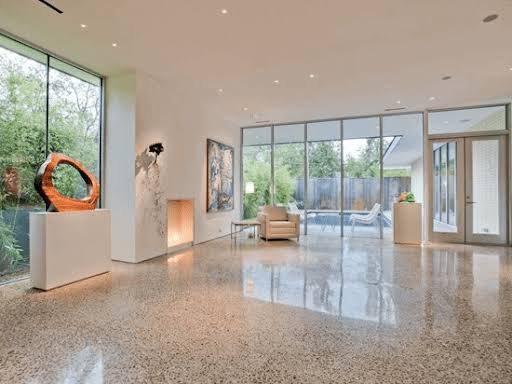
The finish can suit restrained interiors as well as highly active commercial spaces. A satin sheen feels calm in a living area, while a brighter polish can sharpen a showroom. Aggregate exposure changes the visual depth, from faint stone flecks to a more decorative terrazzo-like effect. Colour, lighting, and furniture then sit against a grounded, neutral surface.
Better Light Use
Reflectance is a practical advantage, not just a design preference. A polished floor can move daylight deeper through an open area and help artificial lighting work harder. That matters in warehouses, studios, clinics, and retail settings where visual clarity supports safety and comfort. Higher gloss levels should still be chosen with glare, use patterns, and maintenance capacity in mind.
Strong for Busy Areas
Heavy traffic exposes weak surfaces quickly. Entries, aisles, corridors, and loading zones need a floor that tolerates repeated abrasion. Grinding removes weak paste from the top layer, while the densifier hardens the capillaries within the slab. That tighter finish helps limit dusting and surface breakdown, especially where people, trolleys, or light equipment move through the same paths.
Safer With Proper Care
No flooring material removes every slip risk. The right specification can still improve day-to-day safety. Finish level, sealer choice, cleaning method, and moisture control all affect traction. Wet entries may need mats, drainage planning, or scheduled inspection. A well-kept, polished surface gives owners a clear, manageable base for safer movement through busy rooms.
Useful Across Property Types
The same process can serve many building types because it adapts to the slab and intended use. Homes use it for kitchens, living zones, and entries. Retail spaces value the clean finish and easy cleaning. Offices gain a quiet, professional surface. Warehouses benefit from a hard floor that can tolerate traffic without fragile coverings.
Conclusion
Concrete polishing makes sense because it joins structural strength with practical daily care. It can turn a plain slab into a finished floor that supports hygiene, light, movement, and long-term budgeting. With sound preparation, suitable sheen, and a realistic cleaning plan, polished concrete can serve homes, commercial rooms, and industrial areas well. The result is a durable surface built for real use, not a short-lived appearance.